My Pollinator Pal
This site may contain affiliate links. If you buy through them, I may earn a small commission at no extra cost to you.
The Unsung Night Shift
Meet the pollinators that work after the sun goes down.
Bees get the credit, butterflies get the photos, and moths quietly get the work done after dark. This page is a small tribute to the night shift: who they are, what they pollinate, and how to give them a hand.
Before planting: check your state's invasive plant list, and choose plants native to your region.
Who’s Working Nights?
When the bees clock out, the moths clock in. After dark, they flutter from flower to flower, dusting their fuzzy bodies with pollen, and they visit blooms the bees often skip. Moths also roam farther than bees, which stay close to home, so they may carry pollen to plants that daytime visitors never reach. Scientists have spent far more time watching daytime pollinators, so moths have been quietly working the night shift without much credit.How do you spot a flower built for moths?• It opens in the evening
• Its scent turns up after dark
• It’s often white or pale, so it glows in the moonlight
Meet Some Moth Pollinators
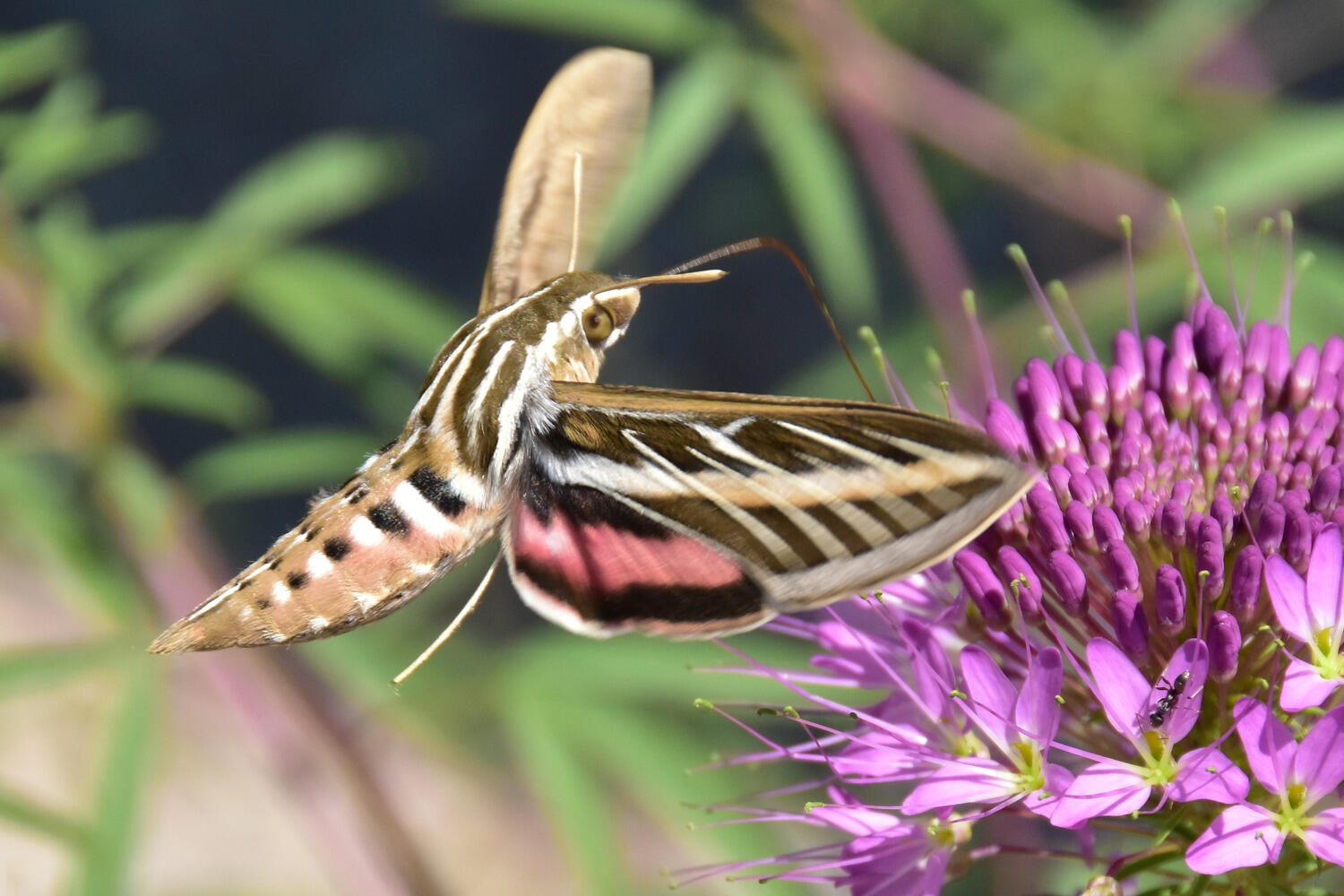
White-lined sphinx moth (Hyles lineata)
Ever think you spotted a tiny hummingbird at dusk? It may have been this moth. It hovers at flowers, feeds from dusk to dawn, and now and then shows up in daylight to confuse everyone.Yucca moths
This is a true partnership. A female yucca moth gathers pollen, carries it to another yucca flower, and pollinates it on purpose, then lays her eggs there. Her caterpillars feed only on yucca seeds. The yucca gets pollinated and the moth gets a nursery, and neither could manage without the other.
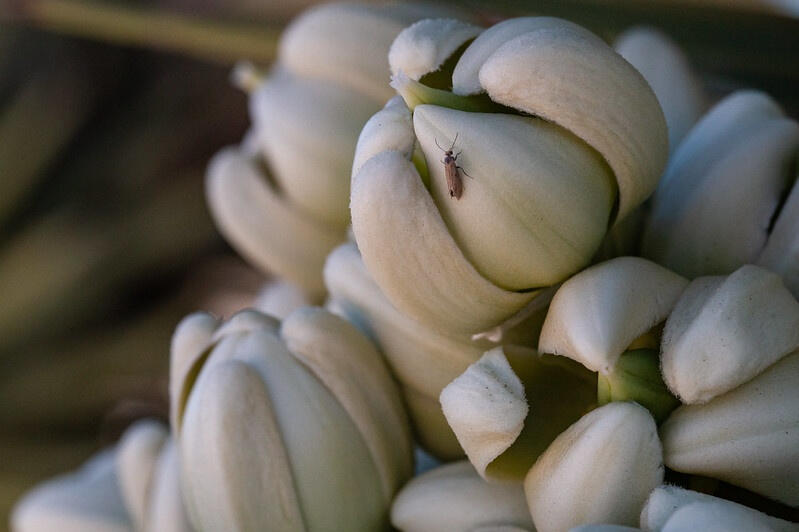
Look closely: a Joshua tree yucca moth on a Joshua tree bloom. Yucca moths and yuccas depend on each other.
Cranefly orchid (Tipularia discolor)
Here’s a partnership with an odd twist. This orchid depends on moths, and the flower’s lopsided shape makes its pollen packets stick to one of the moth’s eyes. The moth flies off wearing them and delivers them to the next orchid.
Moth or Butterfly?
They’re close cousins, but a few clues tell them apart. These are general rules, and there are exceptions:• Colors: butterflies tend to be bright, while moths are more often gray or brown
• Flying hours: butterflies fly by day, and most moths by night
• Resting pose: butterflies fold their wings upright, while most moths hold them flat
• Build: moths are usually plumper and fuzzier
• Antennae: butterflies have thin ones with little clubs at the tips, and moths have broad, feathery ones
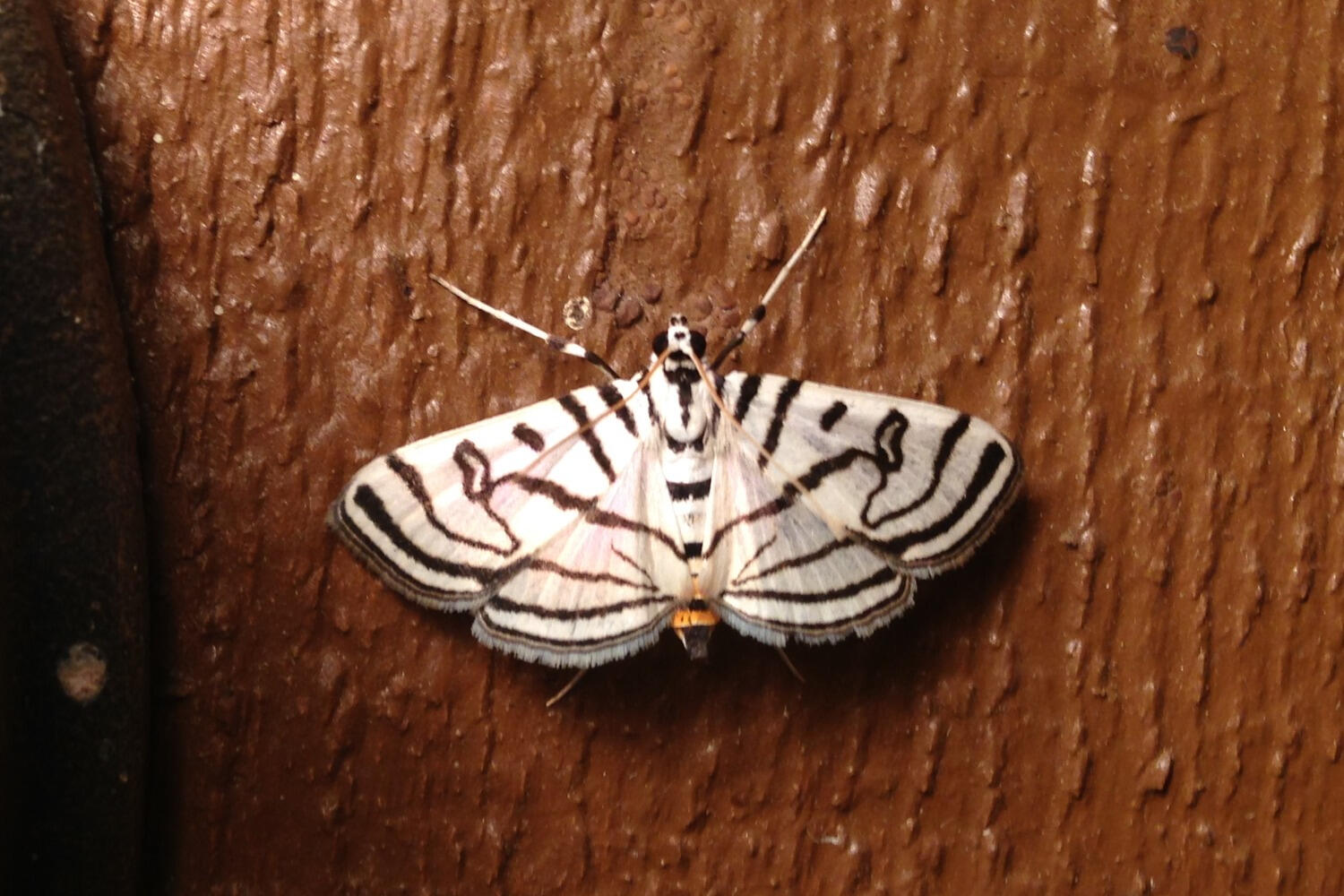
Not every moth is brown. This zebra conchylodes moth wears stripes.
Flowers Moths Love
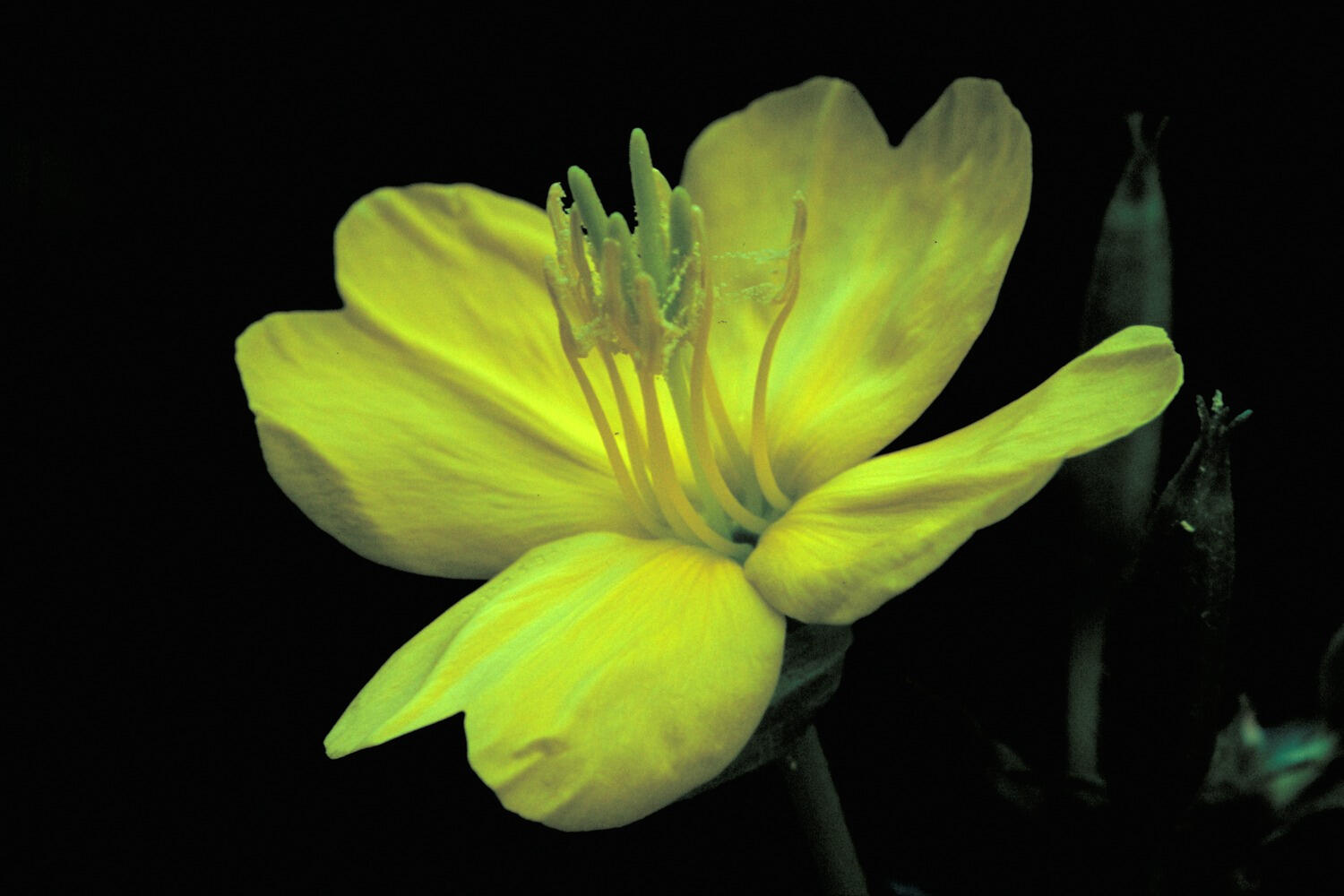
Plant these, then take an evening walk through your garden to see who shows up.Common evening primrose (Oenothera biennis):
• Yellow or pink flowers that open in the evening and are visited by bees and moths
• Native from Newfoundland to Alberta, south to Georgia, Louisiana and northeastern Texas
• Can be weedy outside its native range, so in the West choose a local night bloomer instead
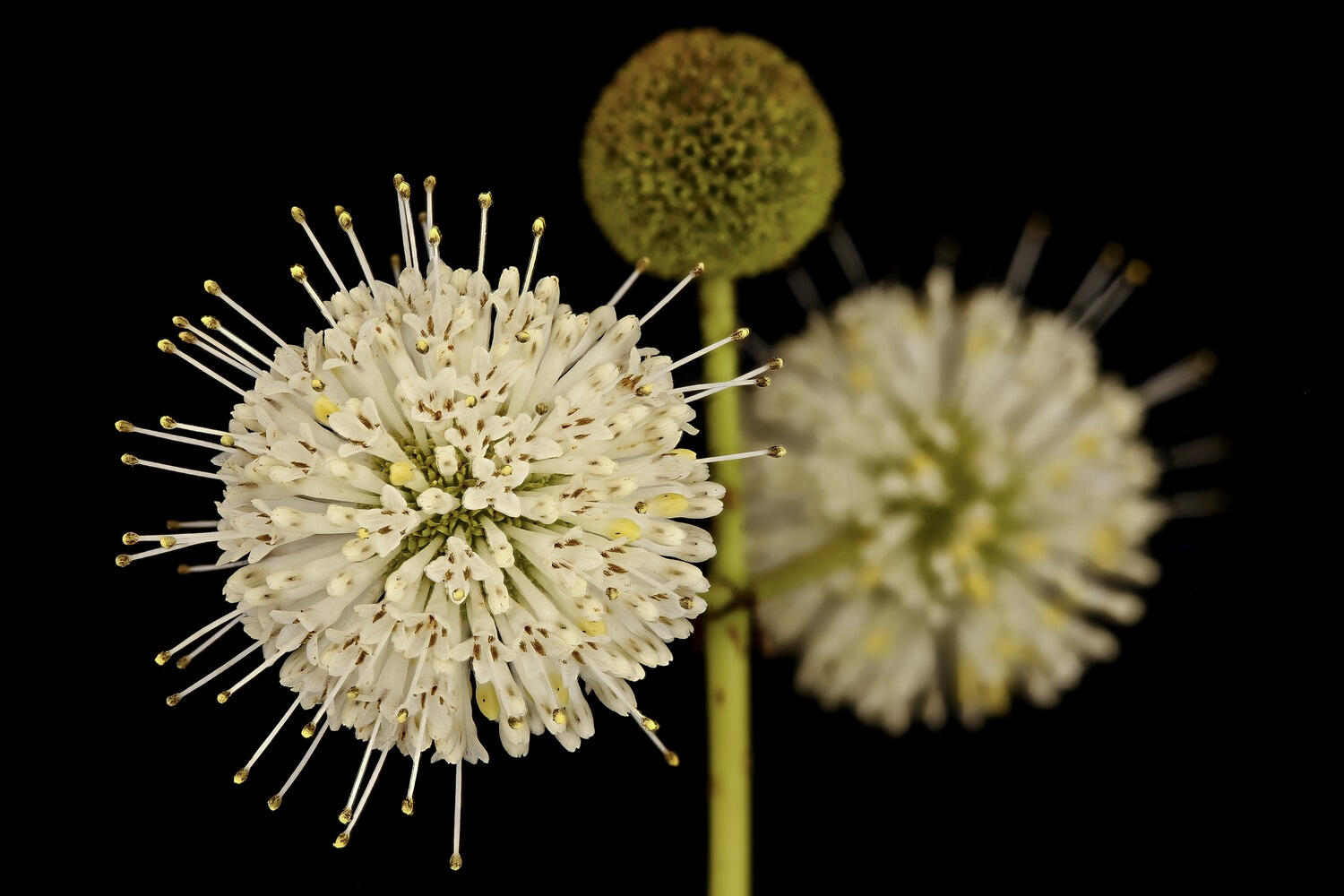
• Blooms July to SeptemberButtonbush (Cephalanthus occidentalis):
• Fragrant, ball-shaped white flowers that feed night-flying moths and other nocturnal insects
• Native from the Northeast to the upper Mississippi Valley, south to Florida and Texas
• Blooms June to SeptemberFoxglove beardtongue (Penstemon digitalis):
• White tubular flowers that are easy for moths to spot in low light
• Native from Maine to Michigan and South Dakota, south to Virginia, Alabama and eastern Texas
• Blooms May to July
Not all of these are native where you live. Check your region first.
Native Yuccas Across the Country
Yuccas grow wild from coast to coast, and most depend on yucca moths to pollinate them. Here are three of the widest-ranging:Adam’s needle (Yucca filamentosa):
• Native from Long Island and Pennsylvania south to Florida and Louisiana
• White, nodding flowers, blooming
• April through AugustSoapweed yucca (Yucca glauca):
• Native from the Iowa Loess Hills to North Dakota and Montana, south to Texas, New Mexico and Arizona
• Blooms June to AugustBanana yucca (Yucca baccata):
• Native from Texas’s Edwards Plateau and Trans-Pecos to southern Utah and southern California.
• Large, drooping white flowers
• Blooms April through July
How to Help Moths
Moths ask for very little, and most of it is simple. You can• Turn off the lights. Artificial light can disorient moths. In one study, night visits to plants dropped by 62 percent in lit areas compared with dark ones. Skip the lighting you don’t need, and consider joining a dark sky initiative.• Plant night bloomers. Choose native flowers that open in the evening, such as evening primrose, yucca and phlox, whose strong scent draws moths in.• Skip the pesticides. They can harm moths, along with other beneficial insects.• Leave some leaves. Many moths and butterflies spend the winter as eggs, cocoons or caterpillars in leaves and soil. Raking and bagging your leaves in fall can remove them from your yard.• Plant host trees for caterpillars. Giant silk moths, for example, lay eggs on oak, sassafras, maple, birch, ash, willow and cherry. Every moth starts as a caterpillar.
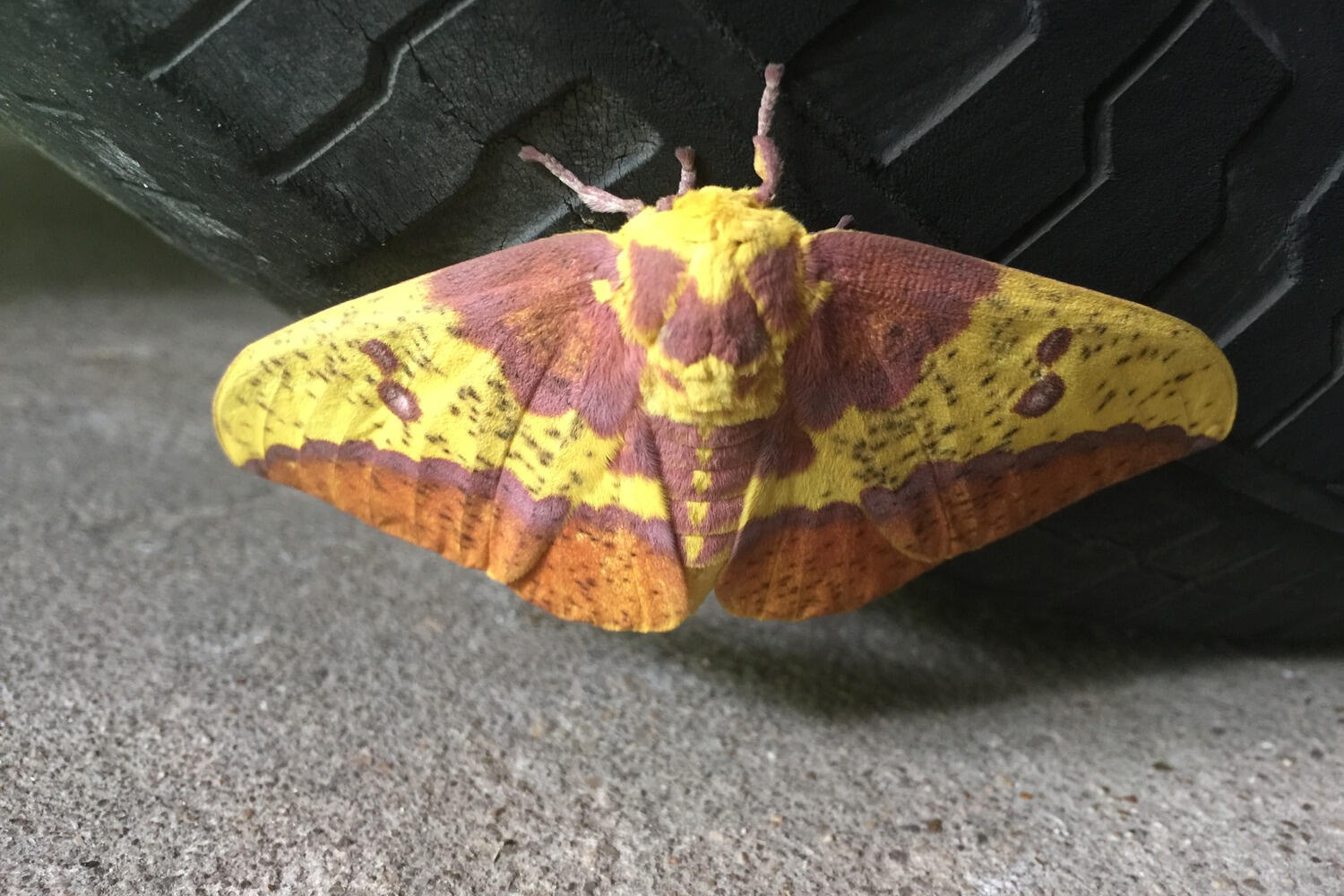
An imperial moth. Adults can’t eat and live only a few days to a week, but their caterpillars feed on trees like maples, sassafras and pines.
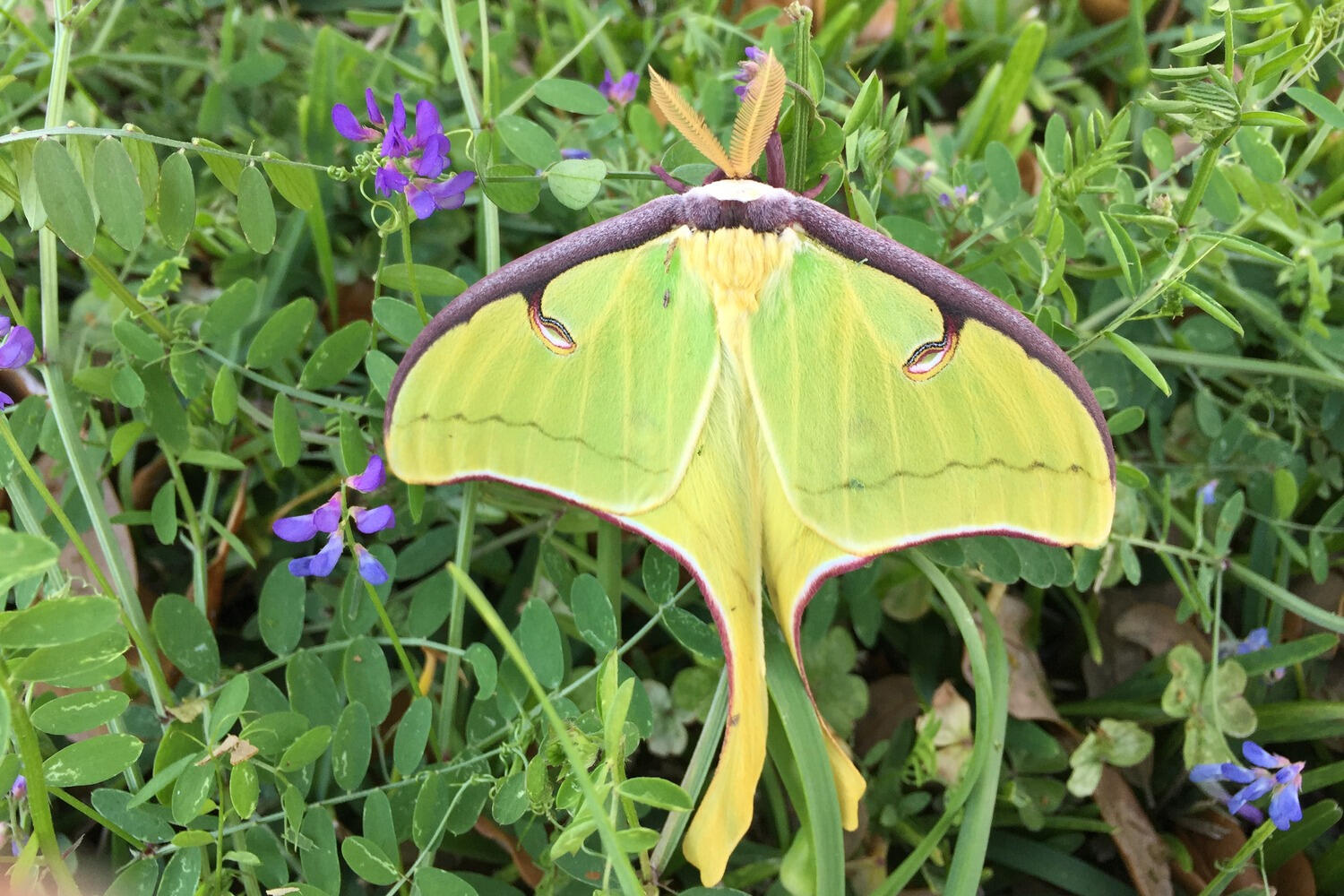
A luna moth. Adults can’t eat and live about a week, but their caterpillars feed on walnuts, hickories, pecan, persimmon, sweet gum and sumacs.
Next warm evening, step outside with a flashlight (or no light at all) and see who’s visiting. You might be surprised.
Sources: Xerces Society; Pollinator Partnership; Illinois Extension; Colorado State University Extension; Lady Bird Johnson Wildflower Center; National Wildlife Federation; Alabama Cooperative Extension System; Missouri Department of Conservation; NC State Extension; North American Orchid Center; In Defense of Plants
© 2026 My Pollinator PalHelping gardeners create thriving pollinator habitats.
About · Privacy · Disclosure · Regions
Photo credits: Tom Koerner/U.S. Fish and Wildlife Service (white-lined sphinx moth); NPS/Carmen Aurrecoechea (Joshua tree yucca moth); Dr. Thomas G. Barnes/U.S. Fish and Wildlife Service (common evening primrose); Helen Lowe Metzman/U.S. Geological Survey (buttonbush); my own (imperial moth, luna moth, zebra conchylodes moth)